How to read Fourth Wing dragons
Start with the vocabulary before trying to memorize names. Keep the exact description you encounter in the book, rather than filling missing details from a picture.
| Term | What it tells you |
|---|---|
| Color | A broad classification associated with a dragon’s den. It does not specify the tail. |
| Tail type | The physical tail category, also commonly described as a breed, such as daggertail or clubtail. |
| Name | An individual dragon. A name is not a new breed or a personality category. |
| Bond | A relationship with a rider. This is a story fact, so examples are hidden below. |
Six colors in the first-book framework
Fourth Wing dragons are commonly grouped into black, blue, green, red, orange and brown. The temperament notes below summarize the secondary reading guides cited at the end; they are broad reputations, not guaranteed behavior. The portraits are original palette studies, not named-character artwork.
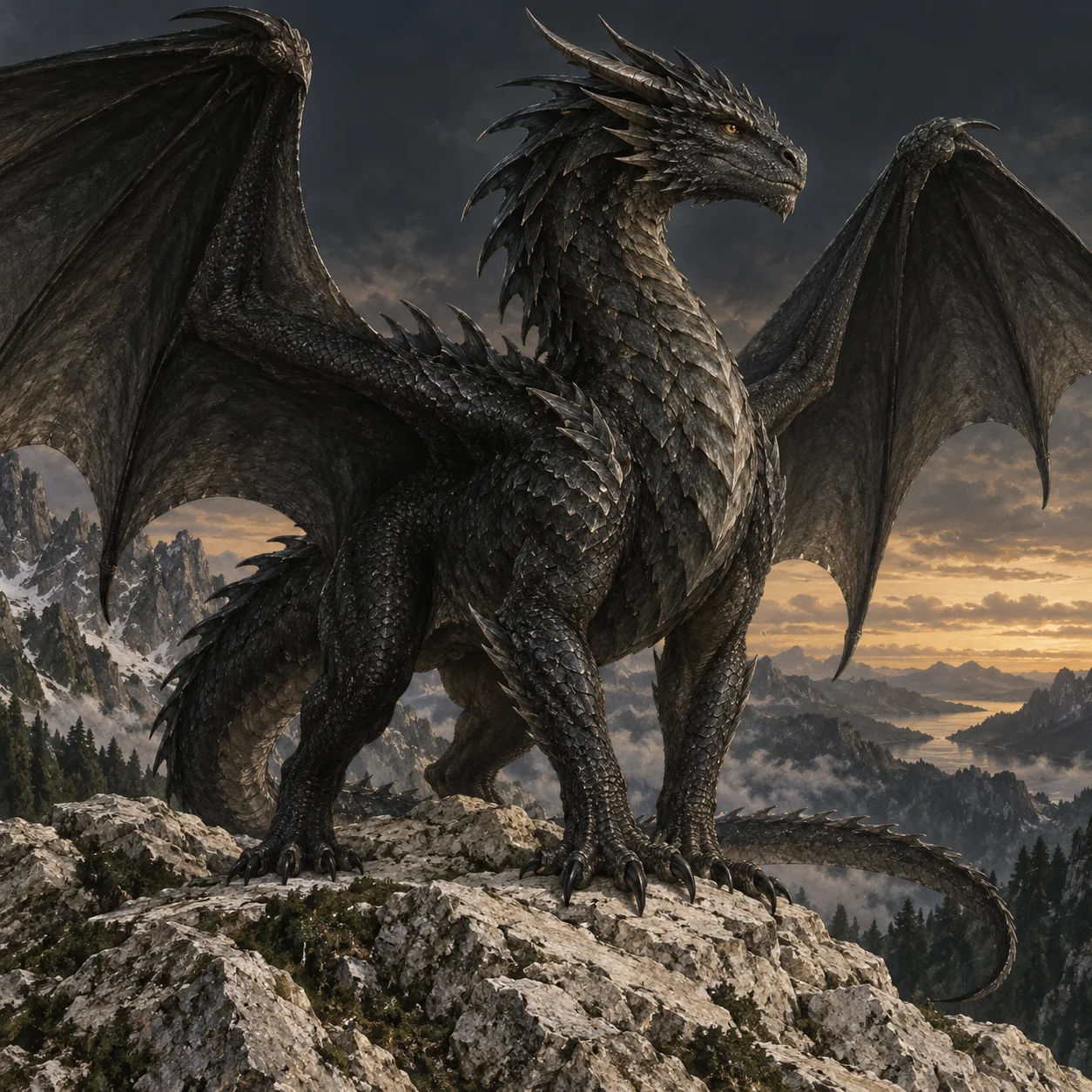
Black
Black dragons are described as particularly rare and associated with intelligence and cunning. That answers the rarity question within this first-book framework, but rarity is not a universal strength score. When comparing Fourth Wing dragons, separate a color’s reputation from an individual’s size, experience and actions.
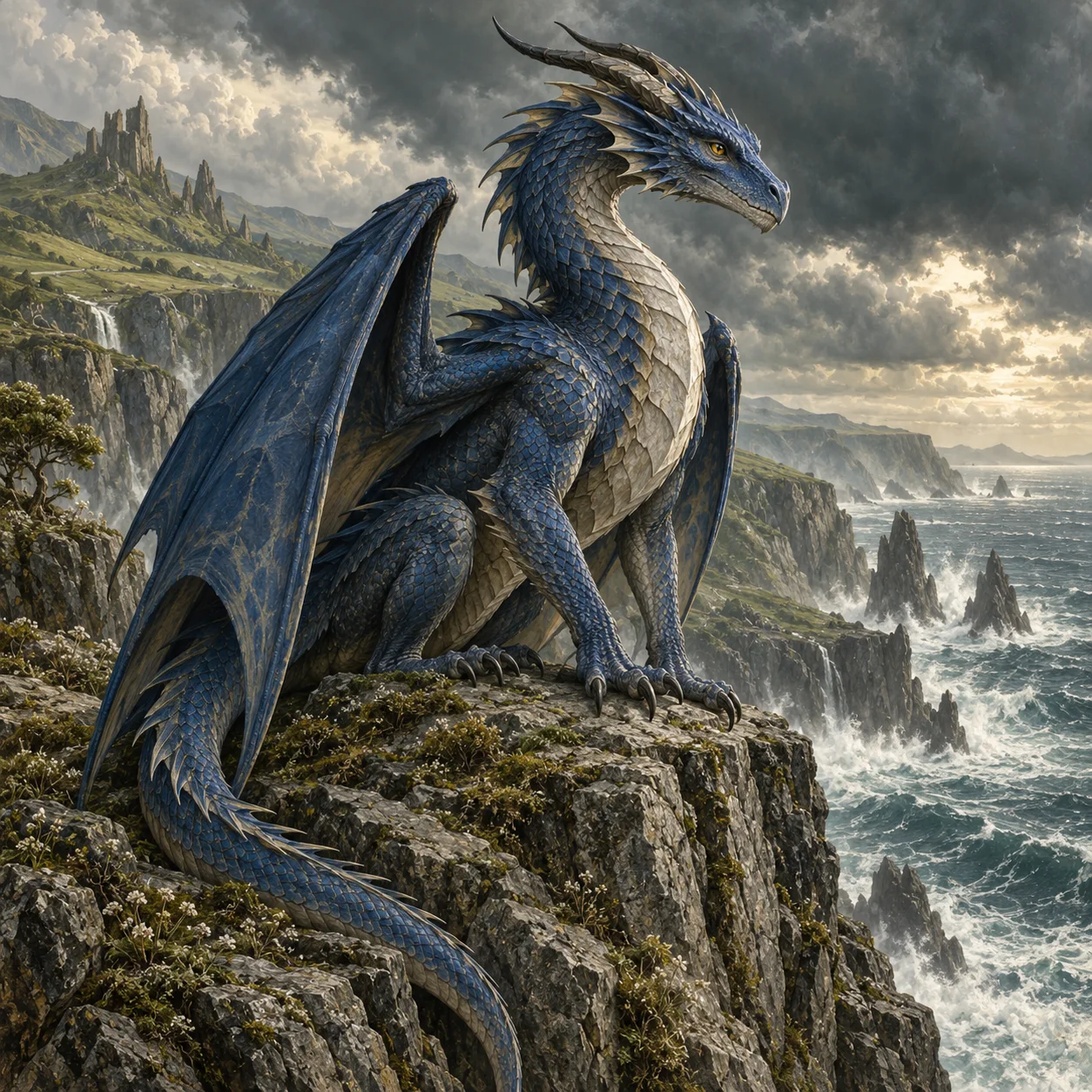
Blue
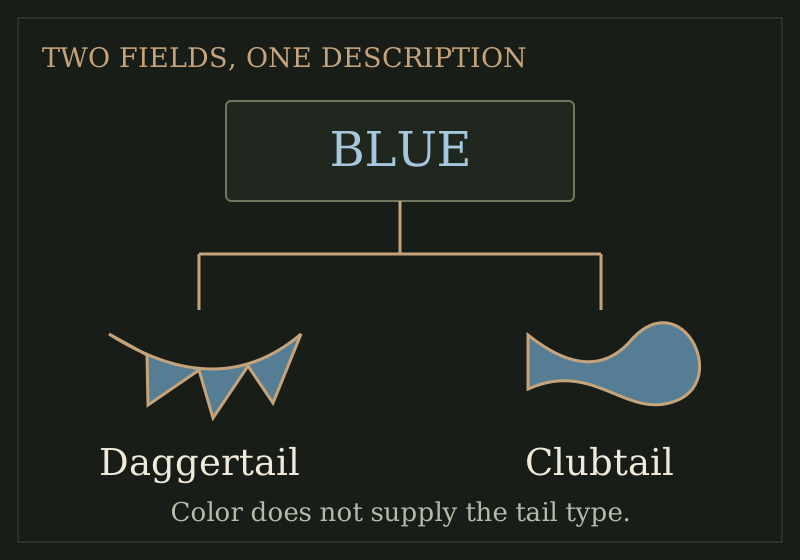
Blue dragons have a reputation for ruthlessness and an imposing presence. They also demonstrate why the categories should stay separate: the author’s published Threshing Day extract mentions both a blue daggertail and a blue clubtail. Color alone therefore cannot supply the tail type.
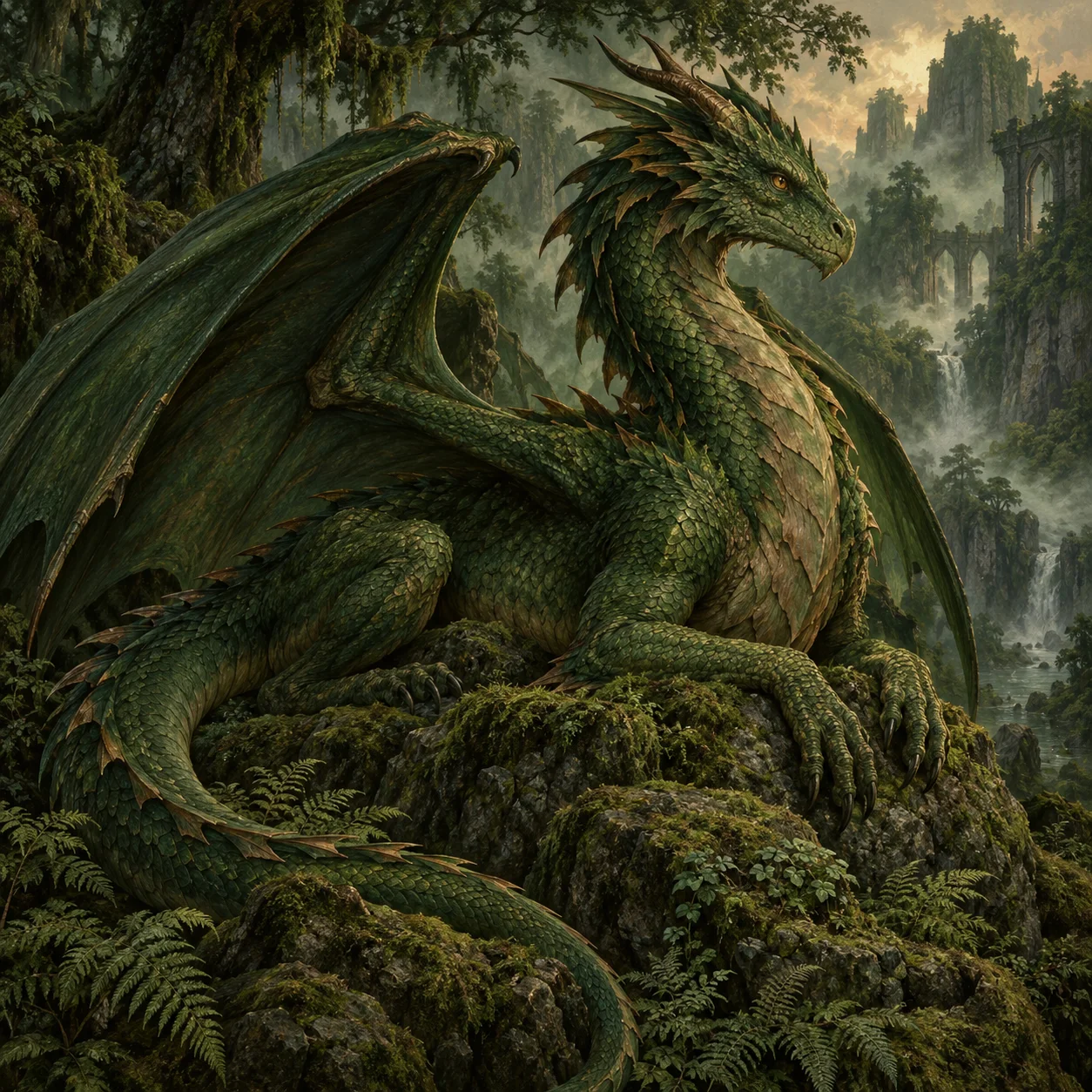
Green
Green dragons are associated with intellect and a rational temperament. This is a broad reputation, not a promise about every encounter. For identification, record green as the color and keep a separate field for the tail; a named green dragon’s description does not automatically apply to the entire category.
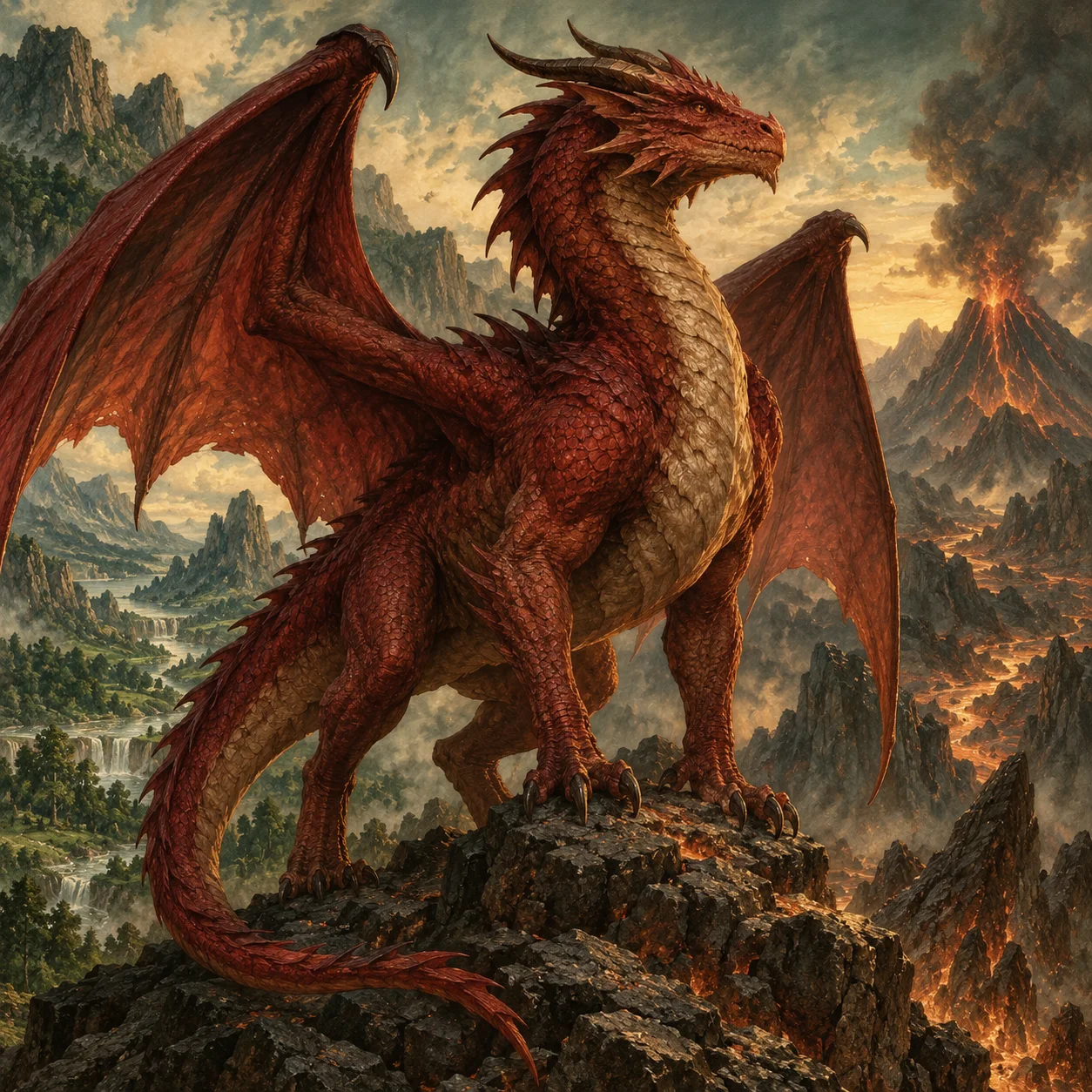
Red
Red dragons are associated with aggression and a quick temper. Those traits help explain why approaching a dragon is dangerous, but they do not turn a color into a predictable game algorithm. For Fourth Wing dragons, an individual’s choices remain more informative than a simple personality label.
Orange
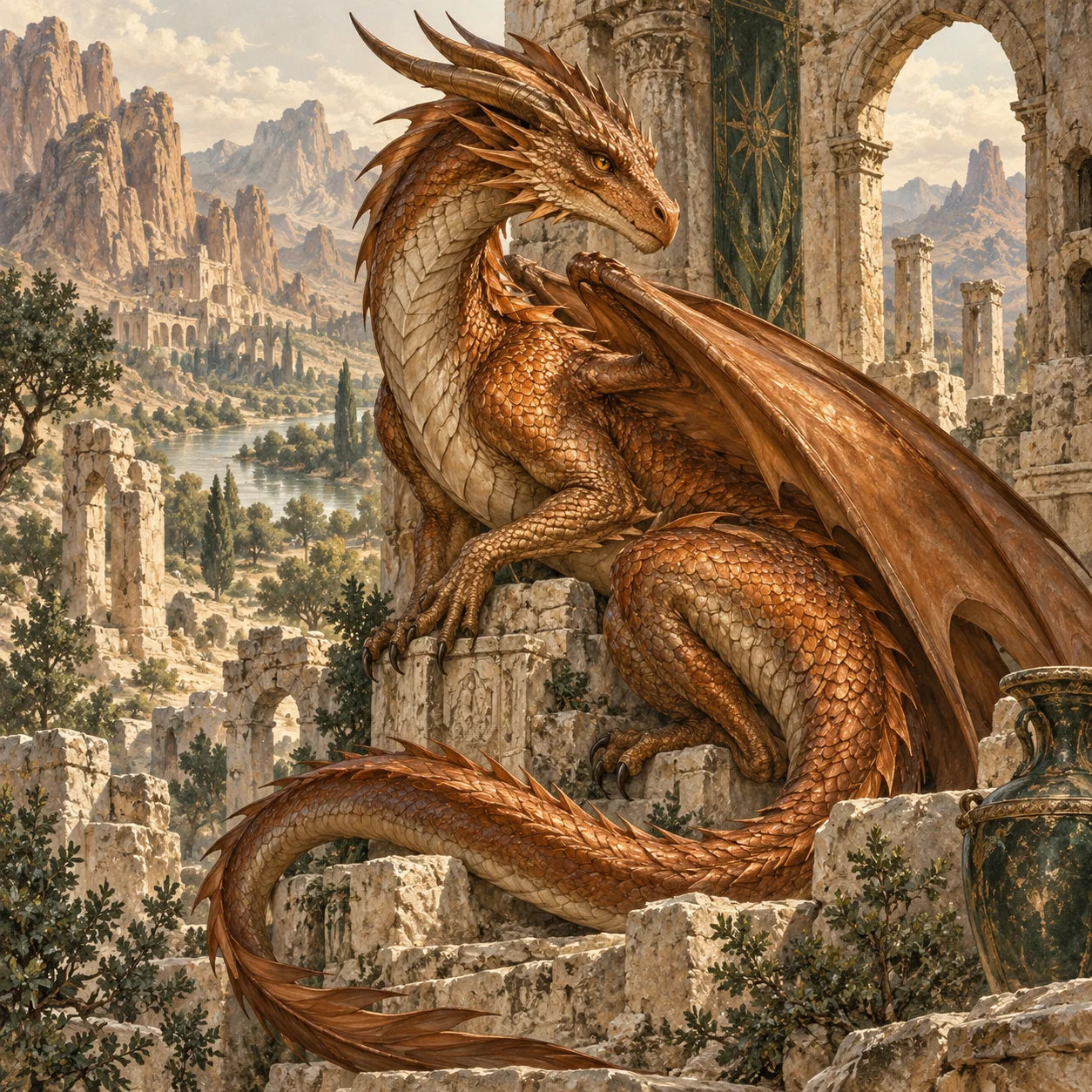
Orange dragons are known for unpredictability. Our portrait uses copper tones to distinguish the palette, but copper is not an extra canon category. Nor does the ruined setting reveal a habitat or a particular character. The useful story information is the orange classification and its volatile reputation.
Brown
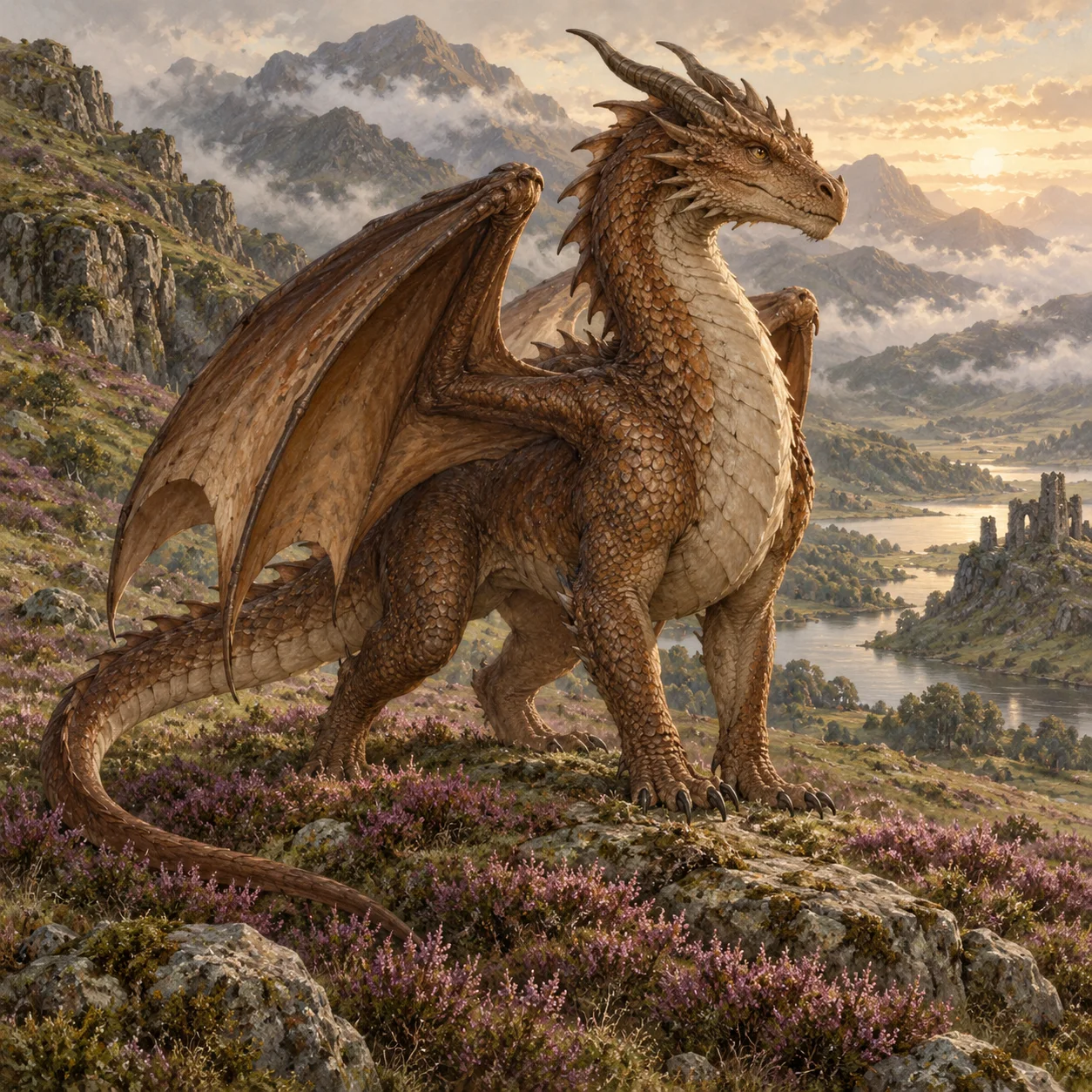
Brown dragons are associated with loyalty in the reading guides used here, although their general characteristics receive less attention than some other colors. Keep that modest evidence in proportion. Fourth Wing dragons still have individual bonds and decisions; a shared color is not a complete account of their personalities.
Fourth Wing dragons: six tail labels
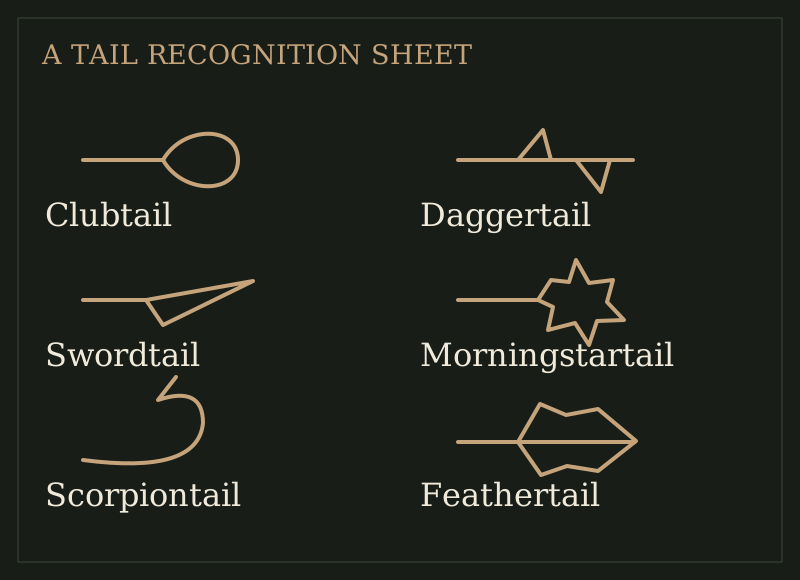
The recurring labels are clubtail, daggertail, swordtail, morningstartail, scorpiontail and feathertail. Read them as visual identifiers, not as an interchangeable list of colors. Our diagram reduces the names to simple shapes: a club, knife-like points, a blade, a spiked club, a curved barb and feathers.
These are memory aids, not anatomical reconstructions. Feathertail deserves particular care: it is not simply another adult weapon in the same sense as the other shapes. The first novel gives that difference story significance. If you have not finished it, leave the explanation there.
Color and tail are two separate fields
For Fourth Wing dragons, write a description in two columns before adding anything else. For example, “blue” answers the color question; “daggertail” answers the tail question. The author’s extract also describes a blue clubtail. That provides a concrete counterexample to treating a color as one fixed tail design.
This distinction prevents a common lookup mistake: finding one familiar dragon of a color and assigning its entire description to another. It also makes a reference more useful when an edition, reading guide or artwork leaves one field unstated.
Selected bonds — first-book spoilers
Fourth Wing dragons choose individuals, so relationships need their own space. Open the panel only when you are ready for named bonds from the first novel. This is a small comparison, not a complete character index. For aliases and more rider connections, open the searchable dragon-name directory.
Reveal selected first-book dragon connections
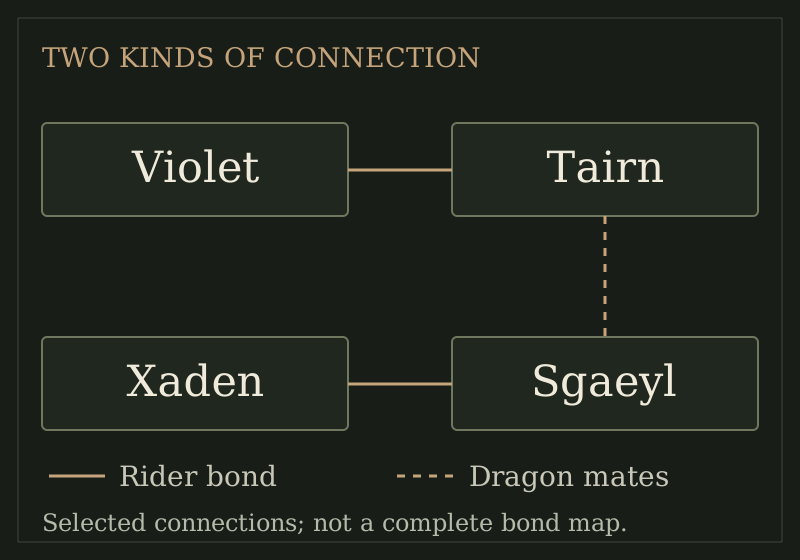
Tairn is a black morningstartail bonded to Violet Sorrengail; Sgaeyl is a blue daggertail bonded to Xaden Riorson. Tairn and Sgaeyl are mates, which is a different relationship from either rider bond. The author’s published bonus chapter supports these connections.
The author’s Threshing Day extract calls Tairn the second-largest dragon. That is a sourced relative comparison, not a measurement in feet. Andarna’s gold feathertail appearance is another first-book reference point; explaining later classifications would cross this guide’s reading boundary.
Comparing Fourth Wing dragons without false precision
“Strongest,” “largest” and “rarest” ask different questions. Black is the rarest of the six familiar colors in the first-book framework. Size does not measure every ability, however, and rarity does not establish who would win a fight. A useful comparison should name the trait being compared.
Dragon bonds also concern power and communication, not ownership: the creatures choose riders and channel magic through the bond. They have their own will. That is why reducing a dragon to a combat ranking misses an important part of the story. Our signets by rider directory separates the characters’ supported abilities from dragon descriptions.
Exact measurements and lineage charts need stronger evidence than a fan illustration. Reading guides sometimes disagree about individual descriptions. We do not fill a disputed tail field or convert a relative size comparison into a precise length. A missing field is a reason to check the passage.
Book lore, the game and your quiz result
Fourth Wing dragons provide the fictional context, while Dragonkind is an official online experience with its own prompts and outcomes. A book description is not a guaranteed sequence of game answers. Our Dragonkind game guide explains that separate route.
The independent dragon quiz is an entertainment tool with an original matching method. It cannot tell you which dragon would canonically choose you, and it does not reproduce an official game result. Use it for a playful result after learning the vocabulary.
Questions readers ask about Fourth Wing dragons
Are colors, types and breeds the same thing?
Searches often use these words loosely. In this guide, color and tail type remain separate so the answer is unambiguous. The six color cards are not six complete combinations of color, tail and personality.
Does this guide reveal later books?
No later-book abilities, outcomes or classification reveals are included. Named first-book connections sit in a closed spoiler panel. Follow the Threshing Day guide if you need the distinction between the ritual and the companion collection.
Can an illustration prove a dragon’s description?
No. Read the caption and check the written source. Our illustrations make Fourth Wing dragons easier to browse visually, while the diagrams explain the categories. Neither replaces the novels as the authority for a character’s actual description.